It is the middle of a school day. A student walks into the counselling room and quietly takes a seat. When asked how things are going, the answer comes quickly: ‘Fine.’ There is a pause. The student looks tired. An assessment is approaching; sleep has not been restful and there has recently been a difficult friendship experience. Time spent scrolling through social media has also increased, accompanied by the familiar feeling that everyone else seems to be doing better.
Yet none of this is what brought the student to counselling. The immediate concern is a recurring stomachache.
As secondary school counsellors, moments such as this remind us that what a young person brings to our attention is not always the whole story. Sometimes the presenting concern is simply the most visible part of a much wider experience. Beneath the surface, several seemingly manageable pressures may be interacting with one another.
Many students appear to be coping. School is attended, work is completed, friendships are maintained and activities continue. Some achieve exceptionally well. Yet functioning well externally does not necessarily mean that everything feels manageable internally. Academic expectations, friendship difficulties, family expectations, social media comparison and uncertainty about the future can all exist simultaneously. Each concern may seem manageable in isolation; together, however, they can become difficult to carry.
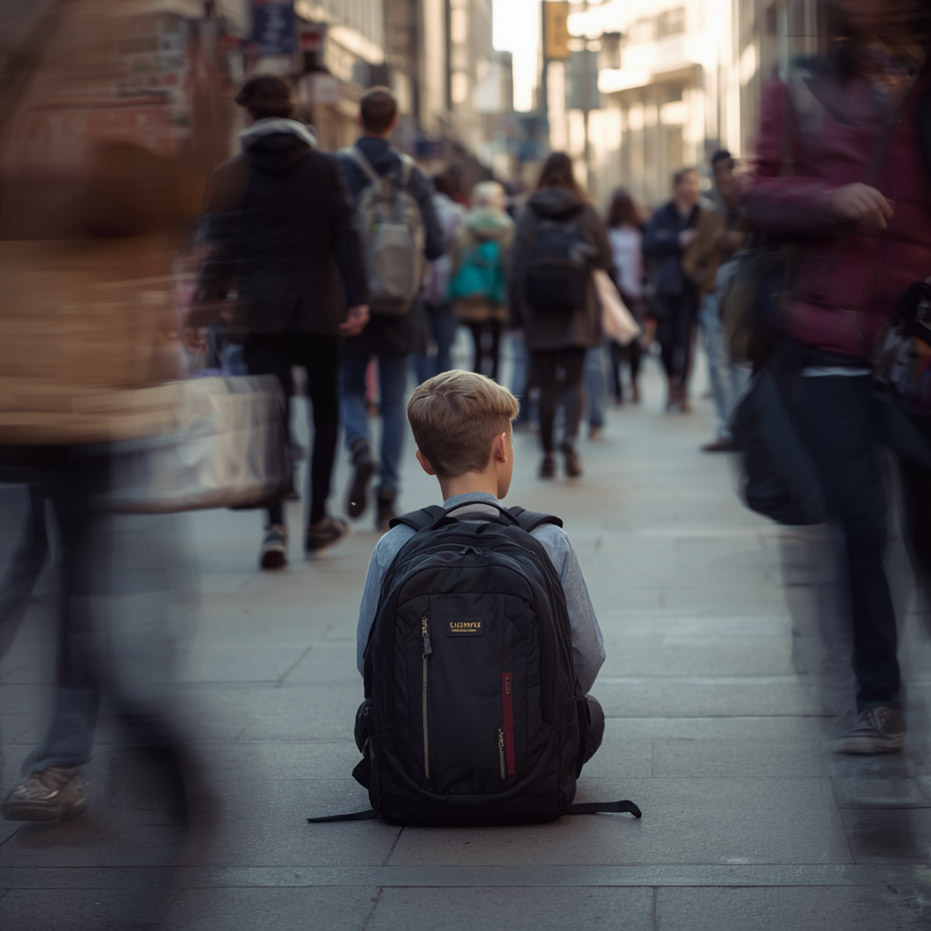
This is what the ‘invisible backpack’ represents: the collection of experiences, expectations and emotions a young person may be carrying without those around them fully appreciating the weight. For some, academic achievement can become closely connected to self-worth. A disappointing grade may feel like more than an academic setback; it can become evidence of not being capable enough or of falling behind an imagined future.
For others, the greatest emotional burden may come from friendships, belonging or uncertainty about how others perceive them. Alongside these experiences are the developmental questions that naturally emerge during adolescence: Who am I? Where do I belong? What do I want my future to look like? Increasingly, these questions are being navigated within an environment of constant digital comparison, where carefully curated versions of other people’s lives can create a persistent sense that everyone else is doing better.
Looking Beyond the Presenting Concern
One of the most important lessons from counselling practice is that the presenting concern is not always the whole concern. A student may arrive worried about an examination, only for the conversation to reveal poor sleep, fear of disappointing others, friendship difficulties or uncertainty about the future. Another may be referred because of repeated visits to the Health Centre with headaches or stomachaches.
Physical symptoms are real and deserve appropriate medical attention. At the same time, they can provide an opportunity to gently consider whether stress, relationships or other aspects of school life may also be influencing the young person’s experience.
A holistic view of wellbeing requires collaboration. A counsellor may hear about the emotional experience; a teacher may observe changes in behaviour and a parent may notice differences at home. Each adult may hold a different piece of the picture while the young person is experiencing the whole picture simultaneously.
Emotional difficulty does not always present as sadness or anxiety. It can appear as perfectionism, procrastination, irritability, withdrawal or disengagement. A highly motivated student may suddenly struggle to begin work, while a previously confident teenager may seek constant reassurance. These changes can be important signals that encourage adults to look beyond the most immediate concern.
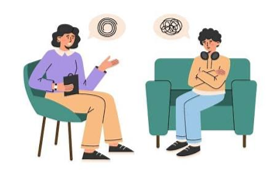
As counsellors, there is also a need to resist the instinct to fix everything. Effective counselling is not always about removing difficulty; it is about helping young people develop the capacity to manage it with greater understanding and confidence. The counselling room can provide space to distinguish personal goals from external expectations, recognise unhelpful thinking patterns, develop coping strategies and build confidence in seeking support.
Creating Space to Be Heard
For adults, this means looking beyond behaviour and becoming curious about what might sit underneath it. Before describing a teenager as lazy, difficult or unmotivated, it is worth considering what may have changed and what pressures may be accumulating beneath the surface. Instead of asking only, ‘What’s wrong?’, we might ask, ‘What feels difficult at the moment?’ The shift is subtle, but it moves the conversation from judgement towards understanding.
Young people do not need adults to remove every challenge from their lives. Setbacks, uncertainty and difficult experiences are important parts of developing independence, resilience and self-awareness. What matters is ensuring that trusted relationships and appropriate support are available while those experiences are being navigated.
The invisible backpack is not a reminder that every teenager is struggling. It is a reminder that there is often more to a young person’s experience than we can immediately see. As secondary school counsellors, our role is to create spaces where concerns can be noticed, experiences understood and support accessed before the weight becomes overwhelming.
We may never know everything contained in a young person’s invisible backpack. But we can make it easier to put some of the weight down.
‘You don’t have to figure this out on your own.’
References
- https://www.jettproof.com.au/blogs/jettproof/the-invisible-backpack-how-sensory-overload-drains-your-childs-energy-at-school?srsltid=AfmBOorPozyzdBaoUUTTWfcVCJe9BGIYxyTG9QadahGAP1n0nN1XYLOk
- https://www.racheldruckenmiller.com/blog/invisible-backpacks-what-are-you-carrying
(Images have been generated using AI)